
Rashes
That ring-shaped rash may not be what you think. Get an accurate diagnosis and real relief from a board-certified dermatologist in South Florida.
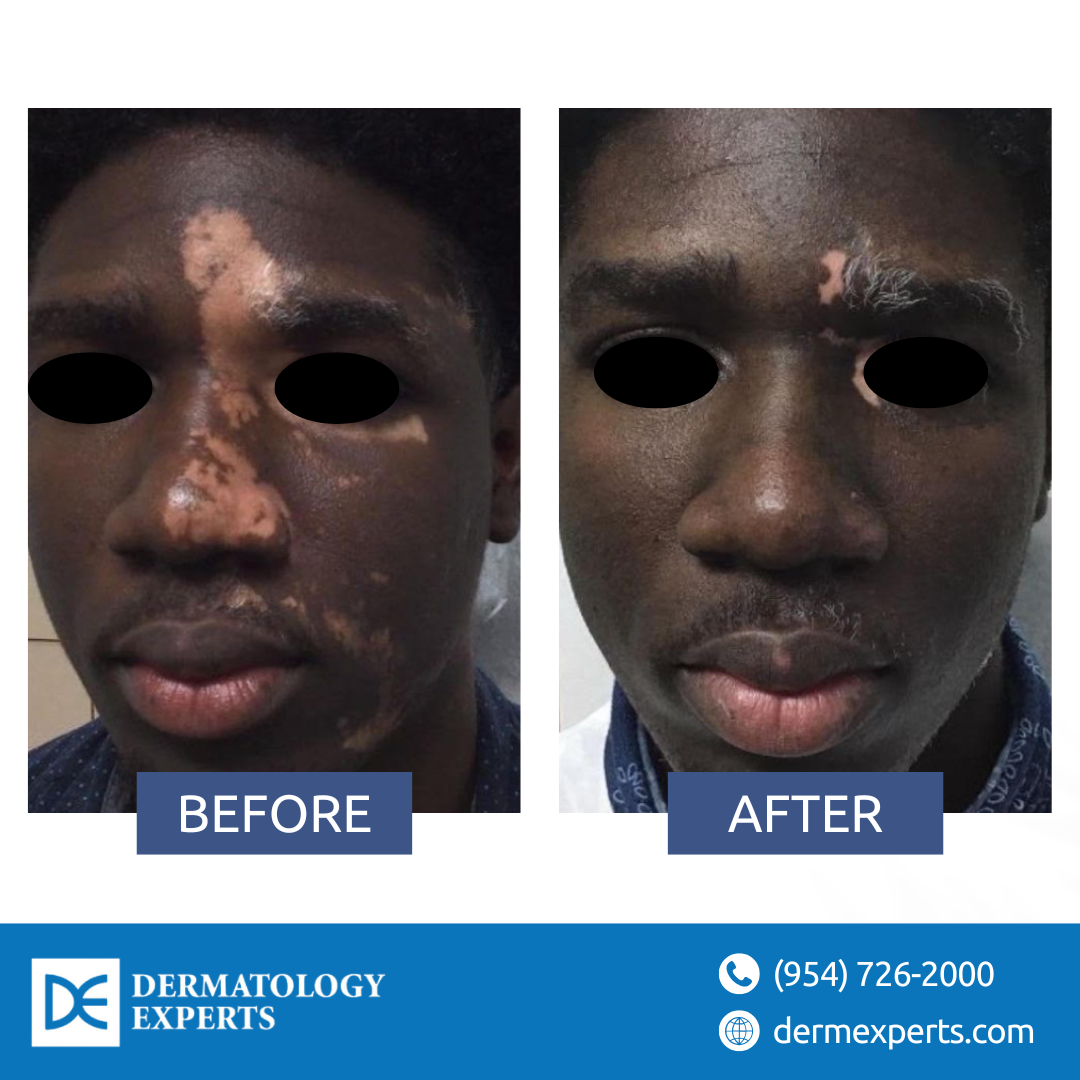
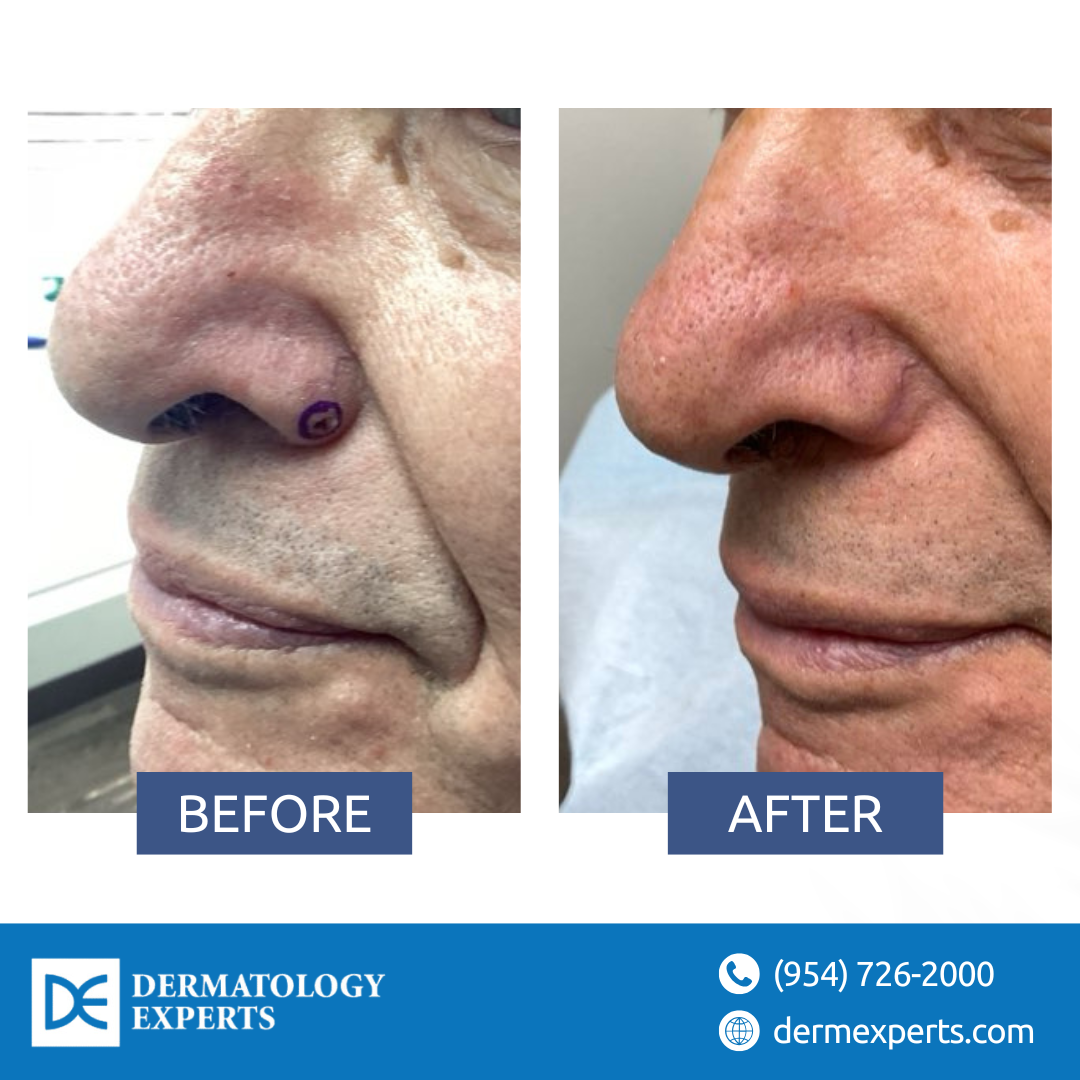
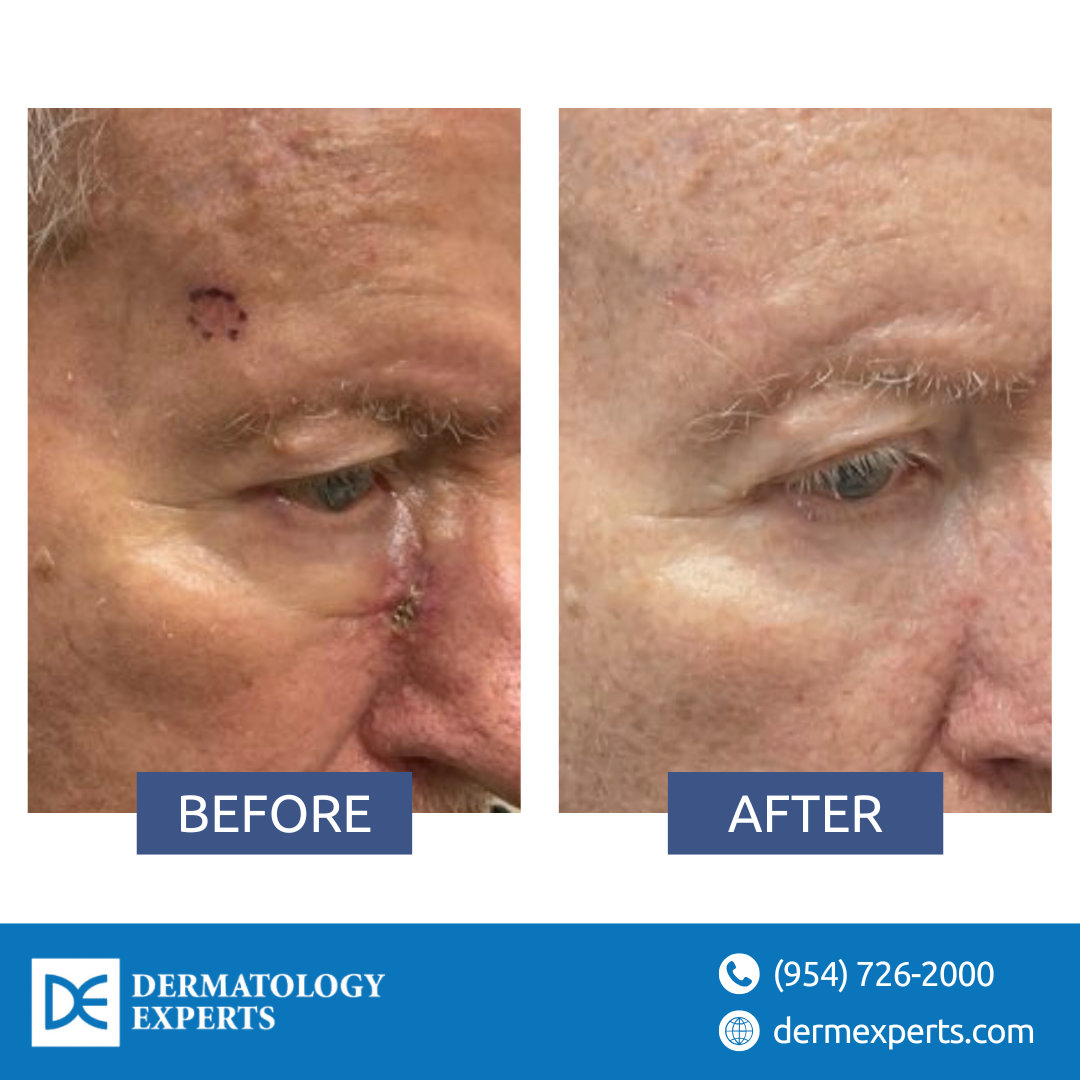
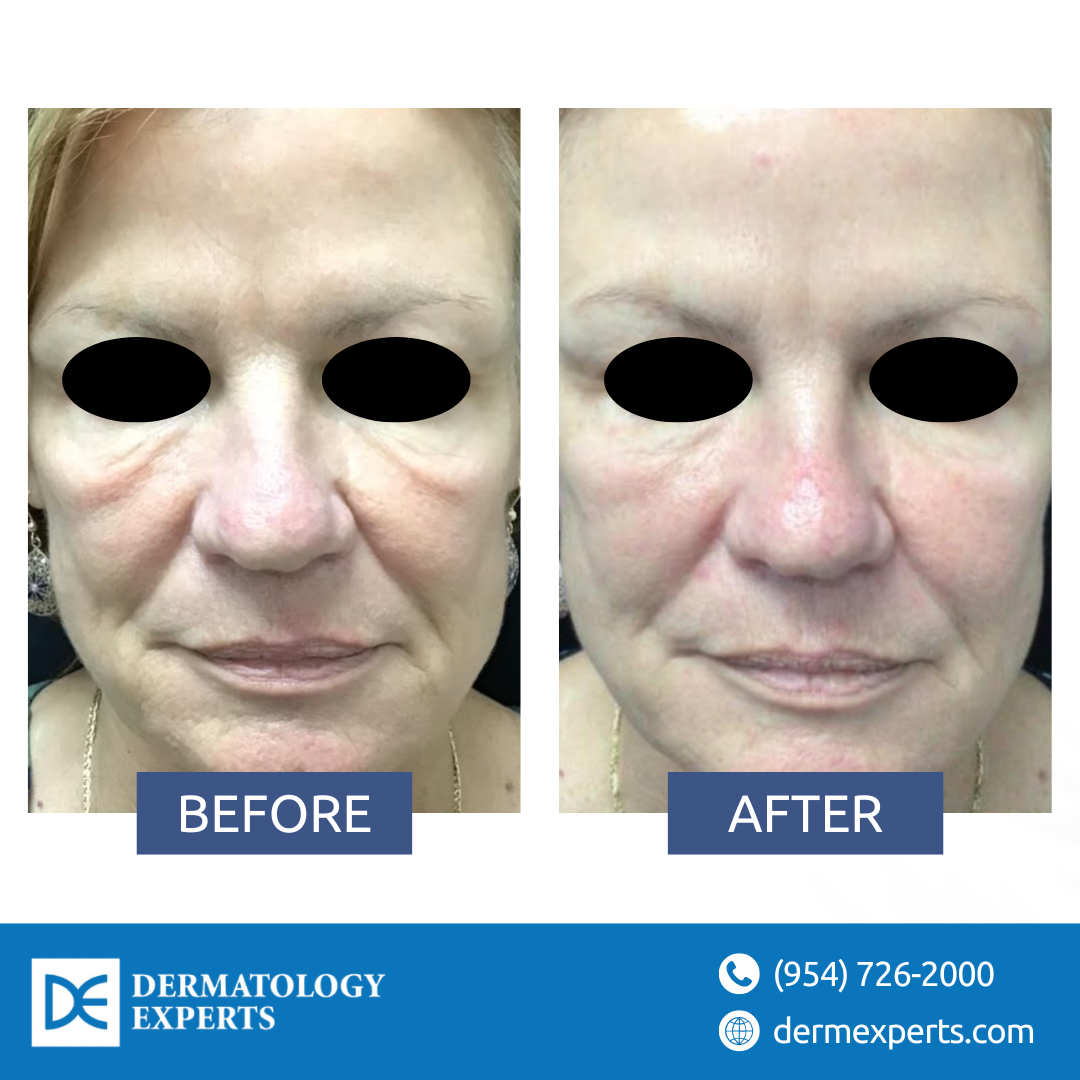
Before and after gallery
Real results from honest, board-certified dermatology in South Florida
That Ring-Shaped Rash Might Not Be Ringworm
You noticed a round, red, scaly patch on your skin and assumed it was ringworm. You tried the antifungal cream from the pharmacy. A week passed. Maybe two. The rash is still there, possibly spreading, and you're starting to wonder if you've been treating the wrong thing entirely.
This is one of the most common scenarios we see at Dermatology Experts. Ringworm, despite its name, is a fungal infection, and it shares its appearance with several other skin conditions that require completely different treatment. In South Florida's hot, humid climate, rashes tend to flare, spread, and linger longer than they would in drier regions, which makes getting the right diagnosis even more important. Treating the wrong condition doesn't just waste time. It can make certain rashes significantly worse.
Conditions That Look Like Ringworm But Aren't
Several common skin conditions produce the same ring-shaped, red, or scaly appearance as ringworm. A dermatologist can tell them apart quickly, often during a single visit, but over-the-counter antifungal treatments will do nothing for most of them. Here are the conditions most frequently mistaken for ringworm:
- Nummular eczema: Coin-shaped, itchy patches that are often crusted or oozing. Common in dry or sensitive skin types and frequently triggered by heat and sweating, both of which are unavoidable in South Florida.
- Psoriasis: Thick, silvery-scaled plaques that can appear in ring-like formations. Psoriasis is an autoimmune condition and responds poorly to antifungal creams.
- Pityriasis rosea: Begins with a single "herald patch" followed by a spreading rash across the trunk. The patches are oval and may have a scaly border that resembles ringworm.
- Tinea versicolor: A fungal condition, but not ringworm. Causes lighter or darker patches on the skin, often on the chest and back, and is extremely common in Florida's humidity.
- Granuloma annulare: A raised, ring-shaped rash with no scales or flaking. It is not contagious, not fungal, and does not respond to antifungal treatment.
- Contact dermatitis: An allergic or irritant reaction that can produce round, red, inflamed patches depending on what touched the skin and where.
- Lyme disease rash (erythema migrans): A classic bull's-eye rash that may resemble ringworm. This requires prompt medical attention, not antifungal cream.
- Secondary syphilis: Can produce a widespread rash that is frequently misidentified. A dermatologist will consider this when other explanations don't fit.
What to Expect at Your Appointment
Diagnosing a rash that looks like ringworm is a process of careful clinical evaluation. Dr. Ayar will examine the rash in detail, ask about your symptoms, history, any products you've used, and whether the rash has responded to previous treatments. Most diagnoses can be made at the first visit.
- Visual exam: The appearance, texture, border, and distribution of the rash provide significant diagnostic information immediately.
- KOH test: A simple, in-office scraping of the rash examined under a microscope to detect fungal elements. This can rule ringworm in or out on the spot.
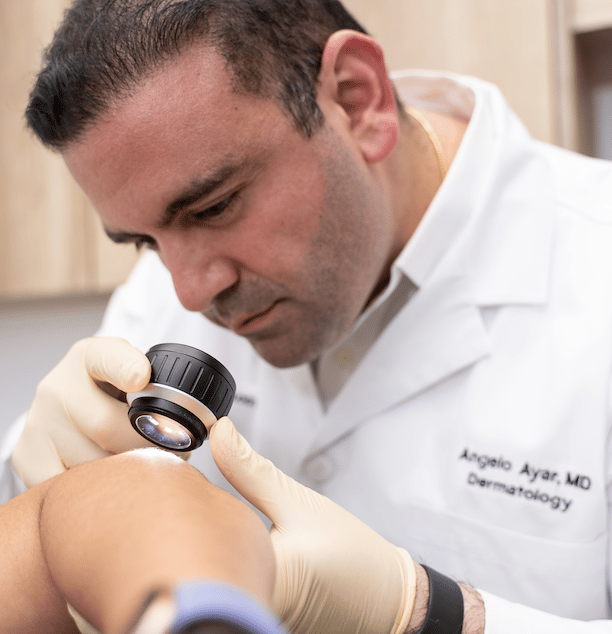
- Dermoscopy: A non-invasive tool that allows closer examination of the skin's surface and underlying structures.
- Skin biopsy (if needed): For rashes that remain unclear after examination, a small skin sample may be sent to a lab for analysis. Results typically return within one to two weeks.
- Patch testing (if contact dermatitis is suspected): Identifies specific allergens triggering the reaction.
- Appointment length: Most initial consultations take 30 to 45 minutes. Same-day appointments are often available.
What Results Look Like
Once the correct diagnosis is established, treatment can begin. The timeline for improvement varies depending on the condition, but many patients notice meaningful changes within two to four weeks of starting the right treatment plan.
- Eczema and contact dermatitis often respond quickly to prescription-strength topical corticosteroids or non-steroidal alternatives.
- Pityriasis rosea frequently resolves on its own within six to eight weeks, though treatment can help manage itching and discomfort in the meantime.
- Granuloma annulare may take longer to treat and may require injection therapy or light-based treatment for persistent cases.
- Psoriasis is a chronic condition, but effective management can significantly reduce flares and keep skin clear for extended periods.
- Tinea versicolor responds well to prescription antifungal treatments, though the skin tone changes it causes may take additional months to fully even out.
The most important step is an accurate diagnosis. Many patients tell us they spent weeks treating the wrong condition before finally getting answers. That time matters, especially in South Florida's climate where rashes can spread and worsen quickly without the right treatment.
Who Should Come In for a Rash Evaluation
If any of the following applies to you, it's time to see a board-certified dermatologist rather than continuing to self-treat:
- You've been using an over-the-counter antifungal cream for two or more weeks with no improvement
- The rash is spreading, multiplying, or appearing in new areas
- You have a ring-shaped rash accompanied by joint pain, fatigue, or fever (this may indicate Lyme disease or another systemic condition)
- The rash is itchy, burning, or painful and disrupting your sleep or daily routine
- The rash appeared after starting a new medication or using a new skin product
- You have a history of eczema, psoriasis, or another skin condition and this rash looks different from what you've experienced before
- You're immunocompromised and have developed a new or unusual rash
- You're unsure what the rash is and want a definitive answer rather than guessing
There is no rash too minor or too confusing to bring to us. If it's bothering you, it deserves a real answer from someone qualified to give one.
Frequently Asked Questions
How can I tell if my rash is ringworm or something else?
Ringworm typically appears as a ring-shaped, scaly patch with a clearer center and an active, raised border. However, several other conditions produce nearly identical appearances, which is why self-diagnosis is often inaccurate. The most reliable way to know is a dermatologist examination, which may include a quick in-office KOH test that can confirm or rule out a fungal infection within minutes.
Is it safe to keep using antifungal cream while I wait for my appointment?
If there's a reasonable chance the rash is fungal, continuing antifungal cream for a short period is generally not harmful. However, if your rash is actually eczema or psoriasis, certain antifungal creams may cause irritation or temporarily worsen the condition. It's best not to apply new products in the 48 hours before your visit so we can see the rash in as close to its natural state as possible.
Could a ring-shaped rash be a sign of Lyme disease?
Yes. The erythema migrans rash associated with Lyme disease can look very similar to ringworm, typically appearing as a bull's-eye pattern that expands outward from a tick bite. If you've been outdoors in wooded or grassy areas and develop a spreading ring rash, especially alongside symptoms like fatigue, joint pain, or fever, please seek medical attention promptly rather than treating it with antifungal cream.
Does my rash need a biopsy, or can you diagnose it without one?
Many rashes can be diagnosed on visual examination alone, particularly with the help of dermoscopy and an in-office KOH scraping. A biopsy is reserved for cases where the diagnosis is genuinely unclear after a full clinical evaluation. If a biopsy is recommended, the procedure is quick and performed right here in our office under local anesthesia.
Will my insurance cover a rash evaluation?
Rash evaluations and treatment for skin conditions like eczema, psoriasis, and contact dermatitis are typically covered by most major insurance plans as they are considered medically necessary visits. We recommend calling your insurer ahead of time to confirm your benefits. HSA and FSA funds are also eligible for dermatology visits and many associated treatments.
Why Patients Choose Dermatology Experts for Skin Rash Diagnosis
Getting the right diagnosis for a rash that won't respond to over-the-counter treatment requires real clinical expertise, not guesswork. Dr. Angelo Ayar completed his dermatology residency at the University of Michigan, one of the most respected programs in the country, and brings that depth of training to every patient he sees across our South Florida locations.
- Board-certified expertise: Dr. Ayar is double board-certified with specialized training in medical, surgical, and cosmetic dermatology. Diagnosing complex or unusual skin presentations is core to what he does every day.
- Full diagnostic capability in-office: From KOH testing to dermoscopy to skin biopsy, we have the tools to reach a clear answer at your visit rather than sending you elsewhere.
- Three convenient South Florida locations: We see patients at our offices in Tamarac, Parkland, and Miami, serving Broward County, Miami-Dade County, Coral Springs, Fort Lauderdale, Pompano Beach, and Boca Raton.
- Same-day appointments available: You shouldn't have to wait weeks to find out what's on your skin. We work to get you in quickly so treatment can begin sooner.
- Warm, no-rush visits: Our patients consistently tell us they felt heard and that Dr. Ayar took the time to explain what was happening and why. That's not an accident. It's how we practice.
- Over 500 five-star reviews: Patients across South Florida trust Dermatology Experts because we give straight answers and genuinely care about outcomes.
South Florida's climate creates a perfect environment for skin conditions to develop, worsen, and spread. Getting an accurate diagnosis from a dermatologist who understands both the skin and the region you live in makes a real difference in how quickly you get better.
Schedule a Rash Evaluation at Dermatology Experts
If you have a rash that looks like ringworm but isn't responding to treatment, or if you simply want to know what you're dealing with before trying anything else, we're here to help. A single visit with Dr. Ayar can give you a clear diagnosis and a real treatment plan.
Call us at (954) 726-2000 to schedule at our Tamarac, Parkland, or Miami location. Same-day appointments are often available. HSA and FSA funds are accepted and may be used toward your visit and treatment. You don't have to keep guessing. We can give you answers.