
Squamous Cell Carcinoma
A squamous cell carcinoma diagnosis can feel frightening, but with the right care, it is highly treatable. At Dermatology Experts, we help South Florida patients understand exactly what they are dealing with and move quickly toward the right treatment.
Before and after gallery
Real results from honest, board-certified dermatology in South Florida
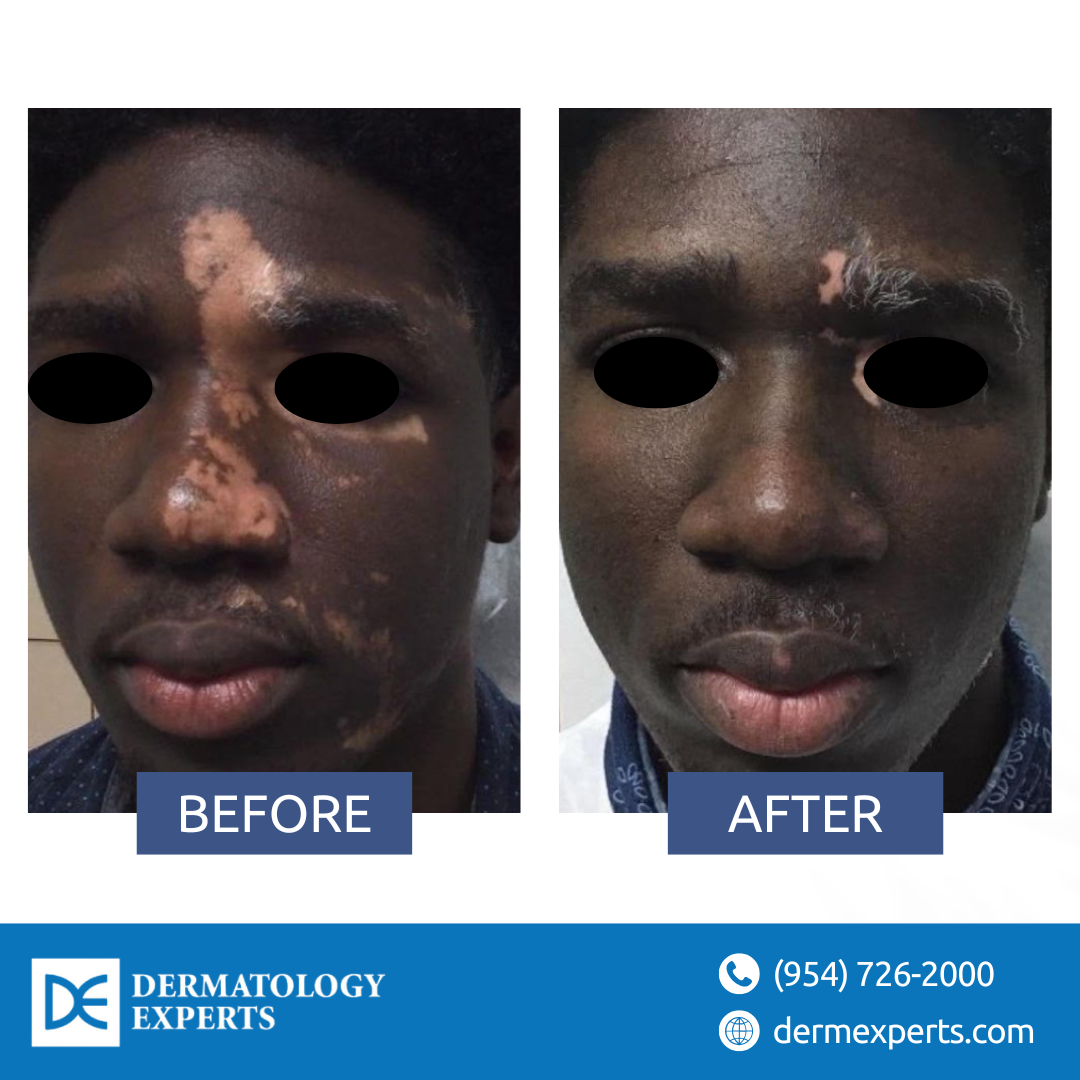
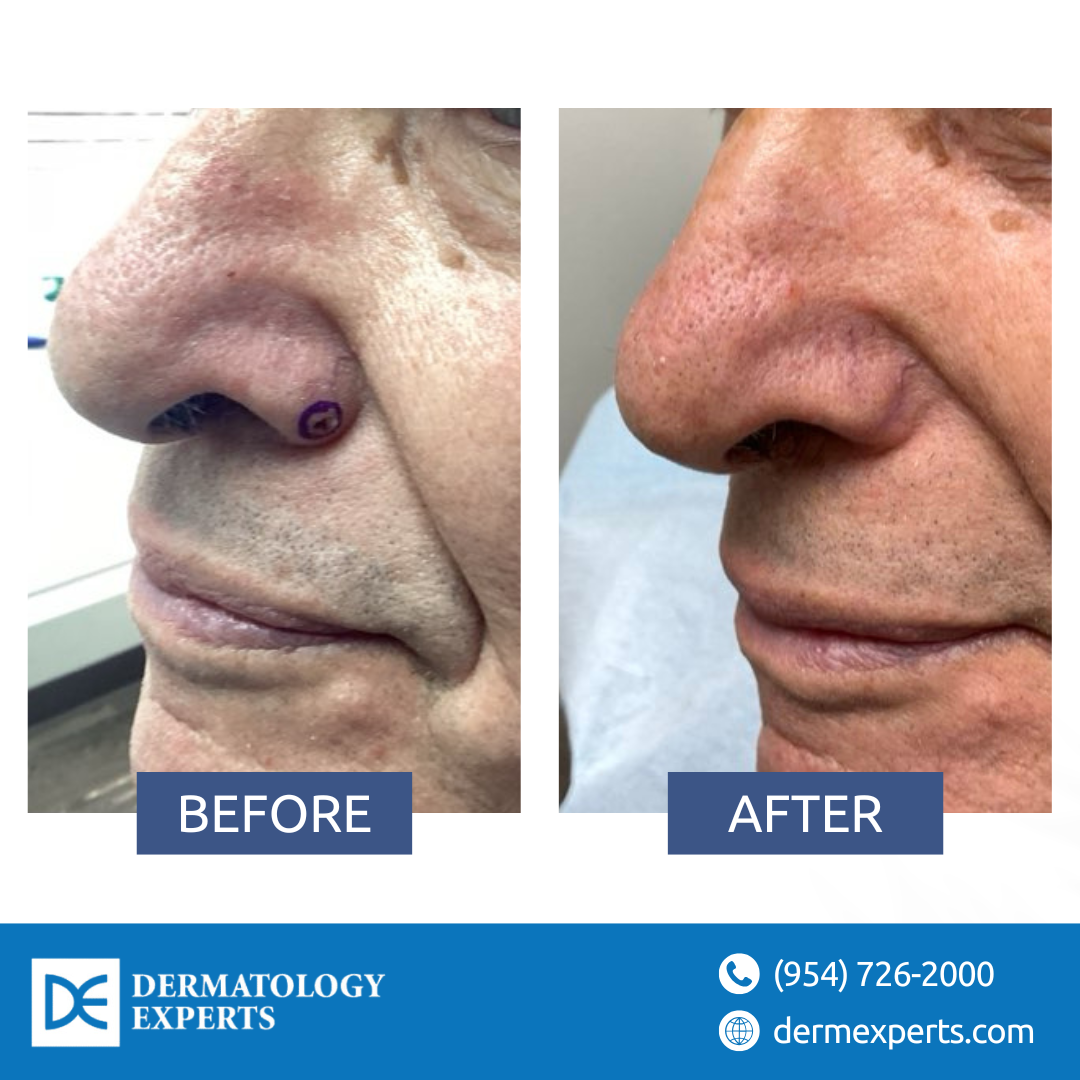
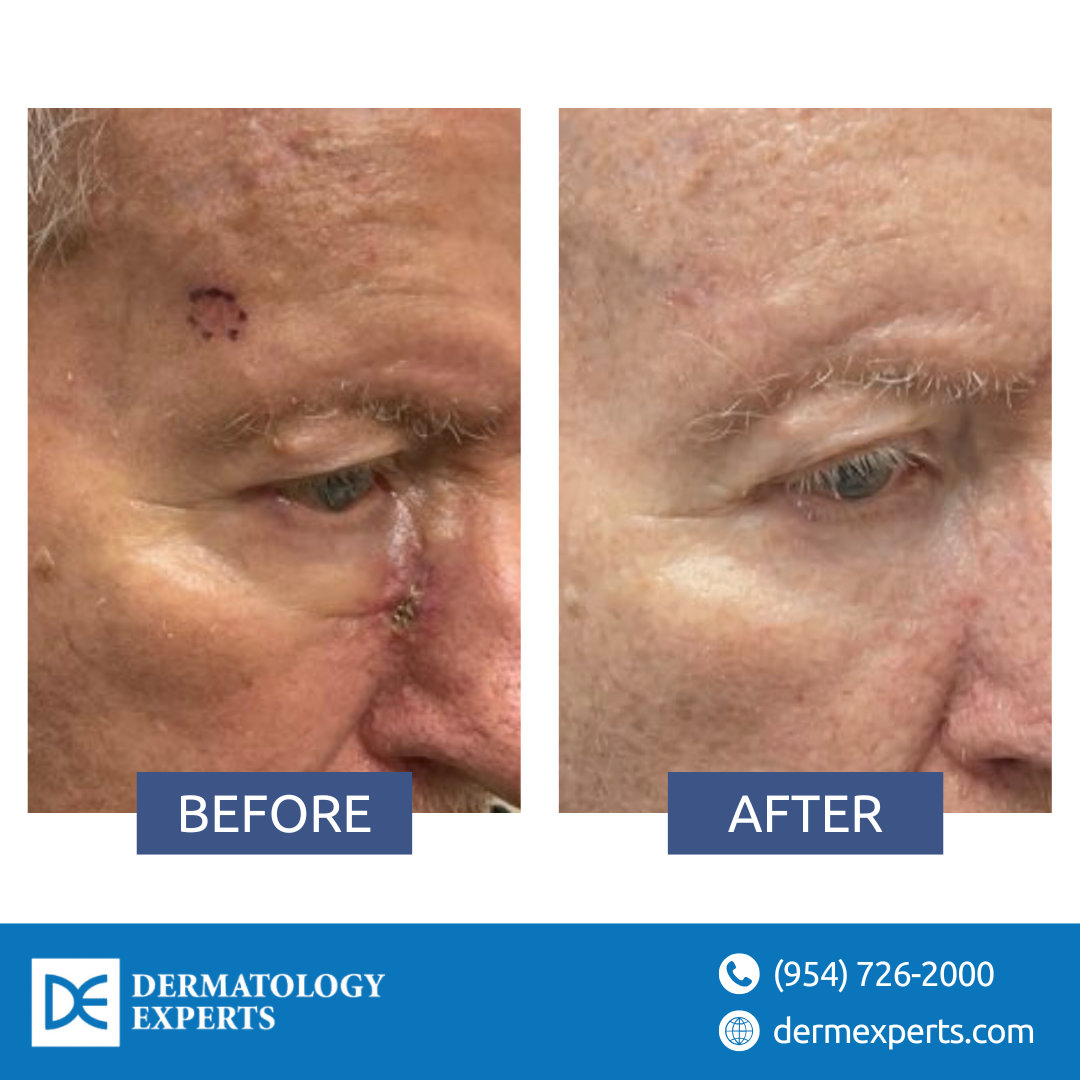
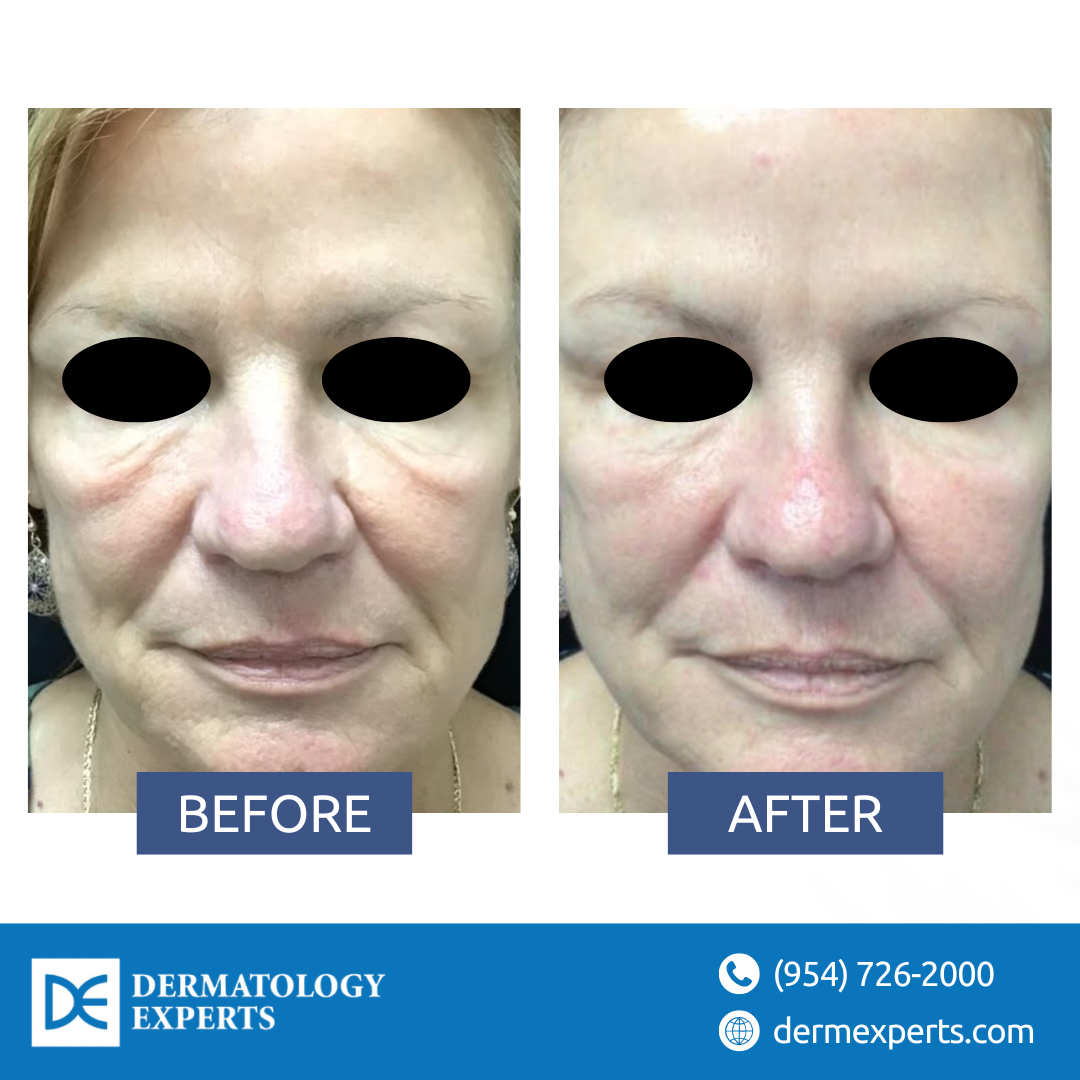
A Spot That Won't Heal Deserves a Closer Look
South Florida's year-round sun is one of the things that makes this place wonderful to live in. It is also one of the reasons squamous cell carcinoma, or SCC, is one of the most commonly diagnosed skin cancers in our region. Decades of UV exposure add up, and for many patients, the first sign is something that seems easy to dismiss: a rough, scaly patch, a sore that keeps reopening, or a raised bump that just doesn't go away the way a normal irritation would.
If something on your skin has been nagging at you, trust that instinct. Squamous cell carcinoma caught early is very treatable. The goal is to avoid giving it time to grow deeper or spread.
What Is Squamous Cell Carcinoma?
Squamous cell carcinoma is a type of skin cancer that begins in the squamous cells, the flat cells that make up most of the outer layer of the skin. It is the second most common form of skin cancer in the United States and is strongly linked to cumulative sun exposure, making it especially prevalent here in South Florida.
- Where it appears: Most often on sun-exposed areas including the face, ears, neck, scalp, hands, and forearms. It can also develop on the lips or inside the mouth
- What it looks like: A firm, red nodule, a rough or scaly flat lesion, a new sore or raised area on an old scar, or a rough patch inside the mouth or on the lip
- How it develops: SCC often begins as a precancerous lesion called actinic keratosis. Left untreated, some actinic keratoses can progress to SCC over time
- Risk of spread: Most SCCs are caught and treated before spreading. However, some types, particularly those on the lips, ears, or in immunocompromised patients, carry a higher risk of spreading to lymph nodes or other organs
- Who is at risk: Those with fair skin, a history of significant sun exposure or sunburns, a weakened immune system, or a prior history of skin cancer
The most important thing to know is that squamous cell carcinoma is not a diagnosis that requires panic. It does require prompt, expert attention.
What to Expect at Dermatology Experts
From your first visit through treatment and follow-up, our process is straightforward and designed to keep you informed at every step.
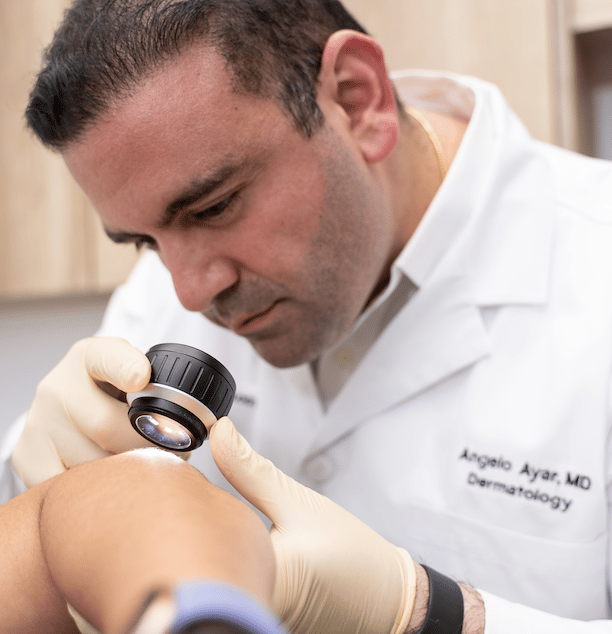
- Initial evaluation: Dr. Ayar will examine the area of concern carefully. If a lesion looks suspicious, a biopsy is typically performed during the same visit
- Biopsy: A small sample of tissue is removed under local anesthesia and sent to a pathology lab. Most patients describe the procedure as quick and well-tolerated. Results are typically available within one to two weeks
- Diagnosis and treatment planning: If SCC is confirmed, Dr. Ayar will review your results with you in plain language, explain the stage and location of the cancer, and recommend the appropriate treatment approach
- Treatment options: Depending on the size, depth, location, and type of SCC, treatment may include Mohs micrographic surgery, standard surgical excision, curettage and electrodesiccation, topical therapies, radiation, or a combination approach
- Follow-up care: After treatment, patients are monitored regularly. A history of SCC increases the risk of developing new skin cancers, so ongoing surveillance is an important part of your care
Same-day appointments are available, so you do not have to sit with uncertainty longer than necessary.
Treatment Results and What to Expect
When squamous cell carcinoma is diagnosed and treated early, the cure rate is very high. Most patients who undergo appropriate treatment can expect full clearance of the cancer at the treatment site.
- Early-stage SCC: Cure rates for localized SCC treated with Mohs surgery or excision are generally very high, often exceeding 95 percent
- Healing time: Surgical sites typically heal over two to four weeks depending on location and size. Many patients return to daily activities quickly
- Scarring: Some degree of scarring is expected after surgery. Dr. Ayar uses precise surgical techniques to minimize cosmetic impact, particularly on the face
- Long-term monitoring: Patients with a history of SCC are at higher risk of developing future skin cancers. Regular skin exams every six to twelve months are typically recommended
The goal of treatment is not just to remove the cancer. It is to give you a clear plan going forward so you feel confident and cared for, not just discharged.
Who Should Be Evaluated for Squamous Cell Carcinoma
You do not need a confirmed diagnosis to come in. If any of the following apply to you, scheduling an evaluation is the right next step.
- You have a sore, scaly patch, or rough bump that has been present for more than a few weeks and is not healing
- You have fair skin and a long history of sun exposure in South Florida, or anywhere with strong UV intensity
- You have been told you have actinic keratoses and have not had a recent skin check
- You are immunocompromised, including patients on long-term immunosuppressive medications after organ transplant
- You have a personal or family history of skin cancer
- You have noticed a change in a spot that was previously monitored and dismissed as benign
- You have a lesion on your lip, ear, or inside your mouth that feels different than it used to
You do not need to wait until something looks dramatic. In fact, it is better if you don't.
Frequently Asked Questions About Squamous Cell Carcinoma
How is squamous cell carcinoma different from basal cell carcinoma?
Both are non-melanoma skin cancers, but they behave differently. Basal cell carcinoma is the most common skin cancer and rarely spreads beyond the original tumor site. Squamous cell carcinoma has a somewhat higher potential to spread to lymph nodes or other parts of the body, particularly when located on the lips or ears, or in patients with weakened immune systems. Both require treatment, but the urgency and approach can vary based on type, location, and individual risk factors. Dr. Ayar will explain exactly which type you are dealing with and what that means for your care.
What does squamous cell carcinoma feel like or look like in the early stages?
Early SCC may look like a rough, scaly red patch that doesn't clear up the way a rash or irritation would. It can also appear as a firm, raised bump, a wart-like growth, or a sore that keeps crusting over and reopening. Some early SCCs are not painful at all, which is part of why they are easy to overlook. If you are in South Florida and have spent years outdoors without consistent sun protection, any persistent skin change is worth having evaluated.
Is Mohs surgery always required for squamous cell carcinoma?
Not always. The right treatment depends on the size, depth, location, and subtype of your SCC, as well as your overall health history. Mohs micrographic surgery is often recommended for SCCs on the face, ears, lips, or other areas where tissue preservation matters or where there is a higher recurrence risk. For lower-risk lesions in other locations, standard excision or other approaches may be equally effective. Dr. Ayar will walk you through your specific situation and recommend the approach that gives you the best outcome.
How much does squamous cell carcinoma treatment cost, and does insurance cover it?
Squamous cell carcinoma treatment is a medical procedure and is typically covered by health insurance, including Medicare, when medically necessary. The specific cost to you will depend on your plan, deductible, and the type of treatment recommended. Our team is happy to help you understand your coverage before your appointment. If you are paying out of pocket, HSA and FSA funds are generally eligible for use toward medically necessary skin cancer treatment.
What happens if squamous cell carcinoma is not treated?
Untreated SCC can grow deeper into the skin over time and, in some cases, spread to nearby lymph nodes or other organs. The longer it is left untreated, the more involved the treatment is likely to be, and the higher the risk of complications. Most SCCs respond very well to treatment when caught early, which is why a prompt evaluation matters. If you have been putting off getting something checked, there is no better time than now.
Why Patients Choose Dermatology Experts for Skin Cancer Care
When you are dealing with a skin cancer diagnosis, you want a physician who has trained specifically in this area and who will treat you like a person, not a chart. That is exactly what Dr. Angelo Ayar and the team at Dermatology Experts provide.
- Elite training: Dr. Ayar completed his dermatology residency at the University of Michigan, consistently ranked among the top dermatology programs in the nation, with specialized training in skin cancer diagnosis and surgical treatment
- Skin cancer research background: Dr. Ayar holds a research fellowship background in skin cancer, bringing an evidence-based perspective to every treatment decision
- Double board-certified: Dr. Ayar is a Fellow of the American Academy of Dermatology (FAAD) and brings both medical and surgical expertise to skin cancer care
- Mohs surgery expertise: For SCCs requiring Mohs micrographic surgery, patients receive that care in-house, without being referred out to an unfamiliar provider
- Full-spectrum care: From biopsy and diagnosis through surgical treatment and long-term monitoring, everything happens under one roof
- Three South Florida locations: Offices in Tamarac, Parkland, and Miami, serving patients across Broward County, Miami-Dade County, Coral Springs, Fort Lauderdale, Pompano Beach, and Boca Raton
- Over 500 five-star reviews: Patients consistently describe the practice as warm, attentive, and reassuring, exactly what you want when navigating a skin cancer diagnosis
Dr. Ayar understands the South Florida skin environment in a way that matters clinically. Cumulative UV exposure here is significant, and his approach to skin cancer care reflects that reality.
Schedule Your Evaluation Today
If you have a spot that concerns you, or if you simply haven't had a full skin check recently, this is the right time to come in. Squamous cell carcinoma is highly treatable when caught early, and the team at Dermatology Experts will make sure you feel informed, reassured, and cared for every step of the way.
Call us at (954) 726-2000 to schedule your appointment. Same-day appointments are available at our Tamarac, Parkland, and Miami locations. HSA and FSA funds are generally eligible for medically necessary skin cancer evaluations and treatment. You don't have to wait, and you don't have to face this alone.