
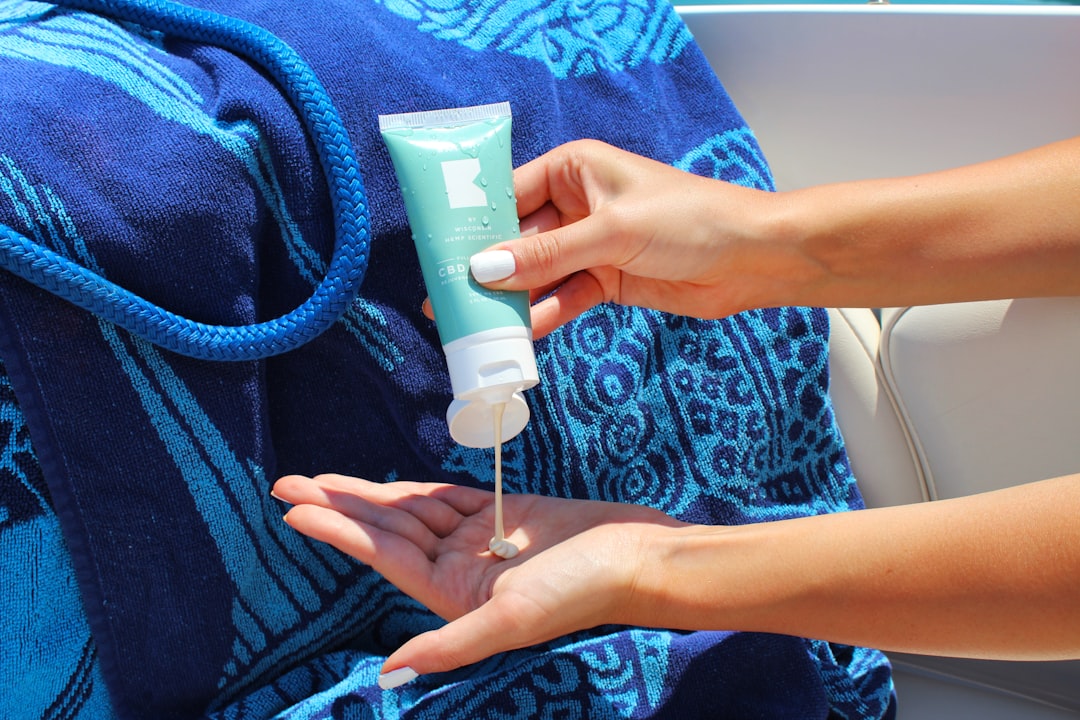
Ask most people about their sunscreen and they'll tell you the SPF number without missing a beat. SPF 30. SPF 50. SPF 100. They've done the research, they've read the labels, and they feel good about their choice. What most of them can't tell you, though, is exactly when in their morning routine they applied it — and that detail turns out to matter more than almost anything else on the bottle.
In South Florida, where UV exposure is year-round and the sun doesn't wait for summer, this isn't a minor technicality. Getting the layering order wrong means your sunscreen isn't performing the way the manufacturer tested it, the way your dermatologist assumes it is, or the way your skin actually needs it to.
Why Order Matters More Than Most People Realize
Sunscreen is not just another moisturizing product you layer in wherever it's convenient. It's a clinically formulated protective agent that needs direct, unobstructed contact with your skin — or with the outermost layer of whatever you've applied — to work properly.
Both chemical and mineral sunscreens have specific requirements for how they function. Chemical sunscreens absorb UV radiation through a photochemical reaction that happens within the formula itself. Mineral sunscreens — those containing zinc oxide or titanium dioxide — create a physical barrier that reflects and scatters UV rays. Either way, if you've applied a thick moisturizer, facial oil, or an occlusive product on top of your sunscreen, you've essentially trapped the active ingredients underneath a layer that can dilute their effectiveness or prevent them from doing their job entirely.
The SPF number on your bottle was determined under controlled lab conditions, using the product exactly as intended: applied correctly, at the right thickness, as the final step before UV exposure. Every time you deviate from that — applying it too thin, applying it too early before products that coat the skin, or layering other products on top — you're no longer getting the protection that number promised.
The Right Order for a Morning Skincare Routine
Here's how a properly ordered morning routine should look, and why each step belongs where it is:
Step 1: Cleanser. You're starting with clean skin, removing sweat, oils, and anything that built up overnight. This part most people get right.
Step 2: Toner or essence (if you use them). These are lightweight, water-based products. They sink in quickly and don't leave a film that would interfere with anything applied afterward.
Step 3: Serums and actives. This is where vitamin C, niacinamide, retinol (though retinol is typically a nighttime ingredient — more on that shortly), peptides, and other treatment products belong. They're designed to penetrate deeply, which means they need to go on before anything that could block their absorption.
Step 4: Eye cream. If you use one, apply it at this stage. Eye creams tend to be richer than serums but lighter than full moisturizers, and they benefit from being applied before heavier layers go on.
Step 5: Moisturizer. This is where a lot of people make the mistake of stopping — feeling hydrated and calling it done. Moisturizer is not sunscreen. It locks in hydration and supports your skin barrier, but it does not protect against UV damage unless it explicitly contains SPF. And even when a moisturizer does contain SPF, the protection level is often lower than a dedicated sunscreen, and people rarely apply enough of it to reach the stated SPF.
Step 6: Sunscreen — last, always. Sunscreen goes on as the final step in your morning routine, after everything else has had a moment to absorb. This ensures the active ingredients are positioned at or near the surface of the skin where they can intercept UV radiation before it reaches deeper layers. If you apply sunscreen and then immediately put moisturizer or oil on top of it, you've undermined the entire step.
Makeup, if you wear it, goes on after sunscreen. If you're using a brush or sponge to apply foundation, do it gently — aggressive rubbing can displace the sunscreen layer you just applied.
How Long Should You Wait Between Steps?
You don't need to set a timer between every product. For most steps — serums, eye creams, moisturizer — waiting 30 to 60 seconds for each product to settle is sufficient. The skin doesn't need to be completely dry before you layer the next product; it just needs a moment to absorb rather than sitting in a wet pool on the surface.
After moisturizer, it's worth giving a full minute or two before applying sunscreen. This gives the moisturizer time to sink in rather than mixing with your sunscreen at the surface level. Mixing the two can dilute the sunscreen's concentration and change its texture in ways that affect how evenly it spreads.
One question that comes up often: do you need to wait 15 to 20 minutes after applying sunscreen before going outside? For mineral sunscreens (zinc oxide, titanium dioxide), no — they work immediately upon application. For chemical sunscreens, most formulas do benefit from about 15 minutes to allow the active ingredients to bind properly to the skin before UV exposure begins. In South Florida, where you can walk from your car to a parking lot and already be accumulating UV damage, that waiting period is worth building into your routine when possible.
The Retinol and Sunscreen Relationship
Retinol deserves a specific mention here because it's one of the most commonly misused products in terms of routine timing. Retinol and direct sun exposure are a genuinely problematic combination — retinol increases photosensitivity, meaning sun damage can occur more easily and more severely when you're using it. This is why retinol and South Florida sun can be a particularly risky pairing for anyone who doesn't build solid sun protection habits around it.
The correct approach: retinol is a nighttime product. Use it in the evening as part of a PM routine, not in the morning. If you're using it at night, your morning routine should still include sunscreen — and that sunscreen is even more important when you're actively using retinol, because your skin's defenses against UV are lowered.
What Happens When People Get This Wrong
Most people don't experience an immediate, dramatic consequence from layering sunscreen incorrectly — which is exactly why the habit is so hard to correct. The damage accumulates quietly. Patients come in with hyperpigmentation, premature lines, and early signs of sun damage that they can't explain because they've been wearing sunscreen faithfully for years. The problem isn't that they weren't using sunscreen. The problem is often that they weren't using it effectively.
Invisible sun damage is something dermatologists detect before patients notice anything — and by the time it becomes visible, it's already months or years in the making. That window between the damage occurring and the patient seeing it is exactly the window that proper sunscreen application is designed to close.
South Florida's UV index sits at extreme levels for much of the year. The exposure here isn't comparable to what someone experiences in a northern climate. What works as a "good enough" habit somewhere with three months of real summer isn't adequate for a region where meaningful UV exposure happens 365 days a year. Year-round sun protection in South Florida isn't optional — and the effectiveness of that protection depends heavily on how it's applied.
How Much Sunscreen Is Actually Enough
Order matters, but so does amount. Most adults apply roughly 25 to 50 percent of the sunscreen they'd need to reach the stated SPF. The general guideline from dermatologists: about a nickel-sized amount for the face alone, and a full shot glass worth (approximately one ounce) for the body if you're going to be exposed. If you feel like you're applying too much, you're probably applying the right amount.
Reapplication is equally important and equally underestimated. Sunscreen doesn't last all day. It breaks down with UV exposure, sweat, water, and physical contact — touching your face, wiping sweat, pressing a phone to your cheek. Reapplying every two hours during outdoor exposure, or after swimming or sweating heavily, is the standard recommendation. For a lot of South Florida patients, this means keeping a travel-size sunscreen in their car, bag, or desk and treating the midday reapplication as non-negotiable rather than optional. The combination of sweat and sunscreen also creates its own skin barrier challenges that are worth being aware of.
Choosing the Right Sunscreen for Your Routine
The best sunscreen is genuinely the one you'll use consistently — but that doesn't mean all formulations are equal for all skin types and routines.
If you have oily or acne-prone skin, a lightweight gel or fluid formula tends to layer better under makeup and feel less heavy throughout the day. If you have dry skin, a sunscreen with added moisturizing ingredients (hyaluronic acid, ceramides, glycerin) can serve double duty and simplify your routine without sacrificing protection. If you struggle with melasma or hyperpigmentation — common concerns in South Florida — a tinted sunscreen with iron oxide provides additional protection against visible light, which plays a role in triggering pigmentation that standard sunscreens don't block. Tinted versus clear sunscreen is a genuinely meaningful distinction for patients dealing with melasma.
There are also sunscreen ingredients that cause more skin reactions than patients expect — if you've ever noticed redness, burning, or breakouts after applying sunscreen, it may not be a sign that sunscreen disagrees with your skin in general. It may be a specific ingredient you're reacting to, and a dermatologist can help identify what to avoid.
When Your Routine Has More Products
The six-step order above covers the basics, but many patients — especially those managing specific skin concerns — are working with longer routines that include prescription topicals, spot treatments, multiple serums, or both an AM and PM active. The same core principle applies: sunscreen goes last in the morning, full stop. Prescription products should be applied in the order your dermatologist recommends, but sunscreen still comes after all of them in a morning routine.
If you're using treatments like chemical peels or microneedling, your provider will give you specific post-treatment instructions — but daily sunscreen as the final morning step is almost always part of that guidance, because treated skin is especially vulnerable to UV damage during recovery.
The South Florida Reality
Living here means your skin is doing something that most people's skin isn't: fighting off serious UV exposure on a completely ordinary Tuesday in January. That changes the stakes around every sunscreen habit, including this one. Getting the layering order right doesn't require buying different products or overhauling your entire routine. It just requires knowing why the order matters and making the adjustment.
If you're dealing with sun damage, hyperpigmentation, or skin changes you can't quite explain, it's worth having a dermatologist take a look. Skin cancer screenings year-round are something every South Florida patient should be building into their calendar — not just when something looks wrong, but as a routine part of taking care of skin that lives in one of the highest UV-exposure environments in the country.
Dermatology Experts has offices in Miami, Parkland, and Tamarac, serving patients across Miami-Dade, Broward, and Palm Beach Counties. If you have questions about your sunscreen routine, your current skin protection habits, or anything you've been noticing on your skin, we're easy to reach and happy to help.